The Intersections of Cinema and Architecture
Event Information:
Film makers and architects explore the fundamental connections shared by the two art forms. How does cinema exhibit characteristics of architecture both through the structure of the medium as well as its narratives? How do architects construct spaces that embody narrative possibilities and guides their inhabitants?
On January 22, 1898 Mikhail and Yulia Eisenstein were enjoying an evening at the orchestra in the Latvian resort town of Majori. During the orchestral performance a brawl broke out in the crowd - Yulia Eisenstein was seven months pregnant at the time. Eisenstein biographer Ronald Bergen recounts that in the midst of the chaos Mikhail reached for his revolver to take control of the situation, Yulia was so frightened by the gunshots that she was forced into labour 3 weeks early. That evening Sergei Mikhailovich Eizenshtein, the filmmaker who would later be known for his theory on montage and the jump cut, was born to the sound of gunshots.
In 1901, a State Counsellor named A. Lebedinsky commissioned Mikhail Eisenstein to design a series of tenement buildings on Albert Street in Riga - the capital city of Latvia. At the height of Art Nouveau in Europe, Eisenstein the elder designed three residential buildings characterized by their classical style and highly ornamented motifs such as animals, plants, and geometrical shapes. As Eisenstein the elder began to draw the plans for Albert street he struggled to meet the demands of fatherhood to his now 3 year old son. One could imagine the confusion felt by a young Sergei with such a detached father and such a loving mother. As a young man, Sergei pursued an education as an engineer, following in his father’s footsteps no doubt; however, during his early twenties Eisenstein would feel a pull towards theatricality, and eventually cinema, with the creation of his first short film titled Glumov’s Diary in 1923. That same year, a young Swiss architect who had recently adopted the pseudonym Le Corbusier, published “Towards an Architecture” - a radical proposal for a new style called modernism. Throughout the early 1920s Le Corbusier’s ideology made its way through Europe until eventually making it past the blockade and into the USSR. In October of 1928, in the midst of designing the now infamous Villa Savoye, Le Corbusier was invited to visit Moscow to participate in a closed competition for the new headquarters of the Central Union of Consumer Cooperatives.
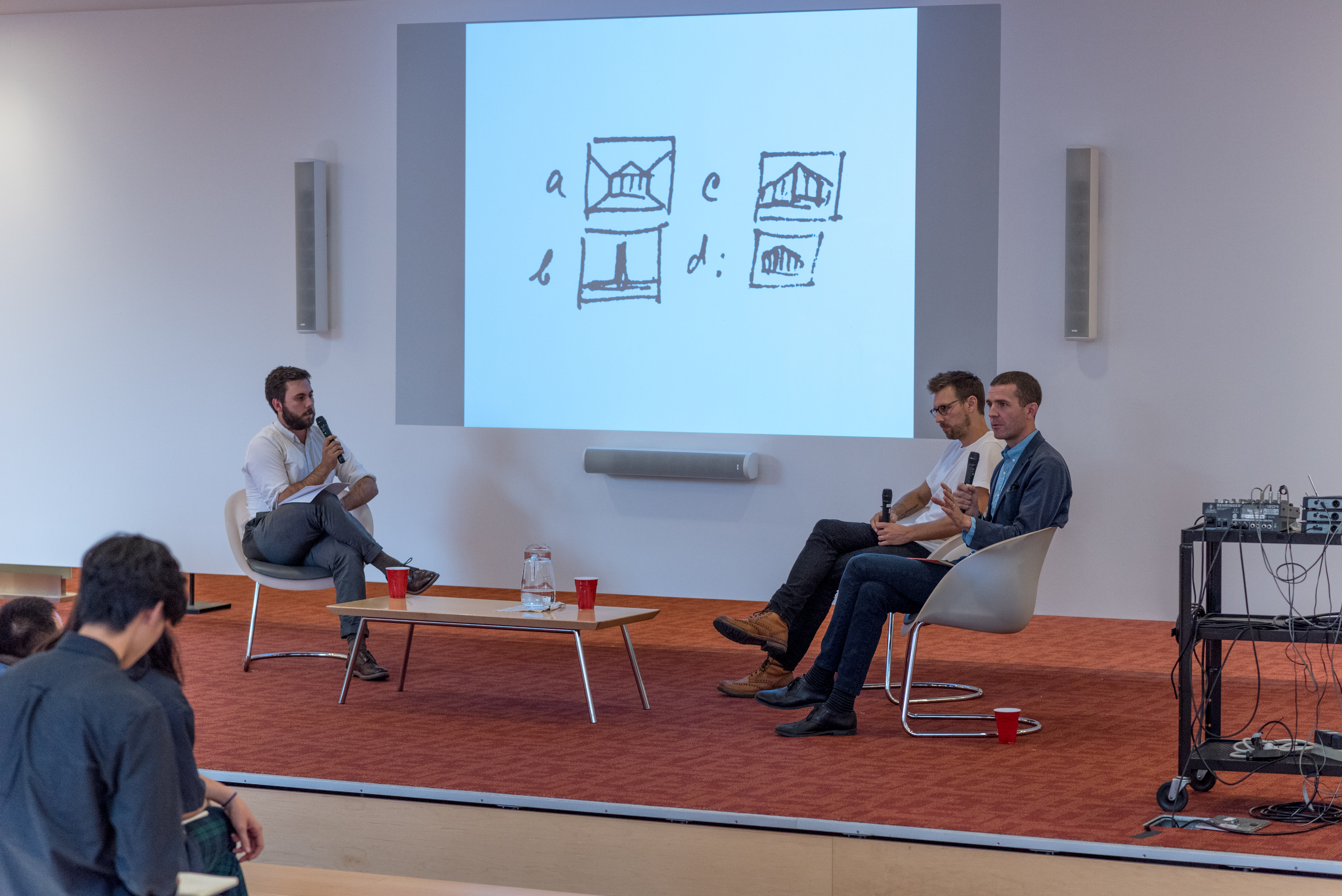
While in Moscow Le Corbusier met with Eisenstein, whom he was familiar with through the Parisian film club “Amis de Spartacus” that showed banned Russian avant-garde films such as Eisenstein’s Battleship Potemkin. In the years following their initial meeting the influence that Le Corbusier and Eisenstein had on each other would become clear. Illustrated best by the Villa Savoye, Le Corbusier developed what he called le promenade architecturale, an experience of moving through a building on foot in order to appreciate the developing views of the ever-changing features of the architecture based on the position of the individual. Similarly, in Eisenstein’s famous essay on montage and architecture he describes architecture inherently possessing what he calls “cinematographicity” (sequentiality plus montage). Using ancient Athens as an example Eisenstein declares the Acropolis “the perfect example of one of the most ancient films.” The cinematic experience that are created, shot by shot, by walking through the buildings of the Acropolis is an example of the parallax effect of the shifting position of the individual - a tradition connecting film and architecture is established.
Throughout the rest of the twentieth century and now into the twenty first, filmmakers, architects, philosophers, and artists have continued to search for, and engage with, this corporeal version of cinema that places the experience of the viewer in the role of cinematographer.
Guest Speakers:
James Macgillivray (Partner, LAMAS) and Joseph Clement (Director, Integral Man)